UOC Primate: It is not noble roots but righteousness that defines a person
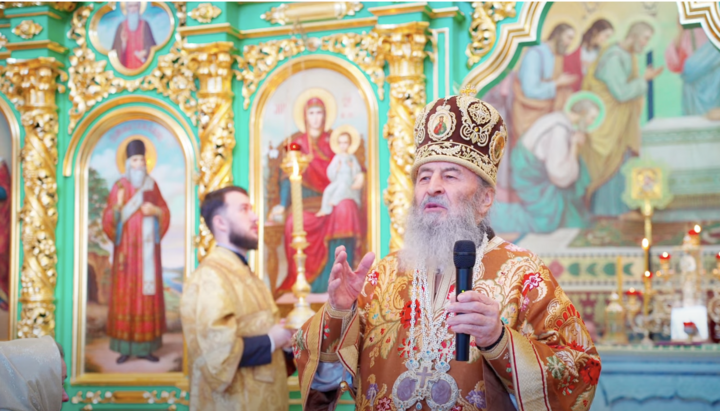
Metropolitan Onufriy. Photo: UOC
On January 5, the 28th Sunday after Pentecost, preceding the Nativity of Christ, His Beatitude Metropolitan Onufriy of Kyiv and All Ukraine officiated a service at the Kyiv-Pechersk Lavra.
After reading the Gospel of the Sunday of the Holy Fathers, the Primate of the UOC addressed the faithful with a sermon in which he reflected on the earthly ancestors of the Lord Jesus Christ. He emphasized that Christ came to save not only the righteous but also sinners, stating, “God came to Earth to save all humanity, not just the righteous but also sinners.”
He highlighted the historical aspects of the Savior’s genealogy: “In Christ’s genealogy, there are 14 generations from Abraham to David, 14 from King David to the Babylonian exile, and 14 from the Babylonian exile to Christ.” Despite the ancient tradition of tracing genealogy through the male line, the genealogy of Christ includes four women, each playing a significant role in history.
The Metropolitan provided examples of these women: Tamar, Rahab, Ruth, and Bathsheba, noting their unique life circumstances. “Christ is not ashamed to include people with challenging lives in His genealogy,” he said. This, according to His Beatitude, demonstrates that “the Lord came not to save the righteous but to bring sinners to repentance.”
“This is a lesson for us as well,” said the Primate. “There’s a modern trend where people search for noble roots – whether they had a prince, count, or baron in their lineage, to claim they come from such bloodlines. Of course, origin does have its importance,” he acknowledged.
His Beatitude emphasized that noble roots can provide certain advantages: “If a person is born from righteous ancestors, it is easier for them to live righteously on earth. They are not inherently corrupted.” However, even if someone comes from a sinful lineage, it does not prevent them from living a righteous life. “It is more challenging for them to stay within the boundaries of God’s Law. It is harder to live correctly. They will constantly be drawn into sin,” the Metropolitan explained.
The key, he stated, lies in personal efforts toward righteousness: “If a person works on themselves, regardless of their lineage, they can be righteous.” The Primate stressed that it is not ancestry but self-discipline that matters: “If a person does not work on themselves, even if they are born of the holiest relatives, they can still be sinful and lost.”
“Thus, the Lord teaches us not to seek noble bloodlines in our ancestry but to illuminate our lineage with a righteous, good, and devout Christian life,” concluded the First Hierarch.
At the end of the service, the Primate of the UOC extended his greetings for the upcoming Nativity of Christ: “I congratulate all of you on the upcoming Feast of the Nativity of Christ. May the Lord, who came to earth for our salvation, strengthen us, help us, forgive our weaknesses, and lead us to salvation.”
As previously reported by the UOJ, His Beatitude spoke about the primary mission of an Orthodox bishop.
Pročitajte takođe
Епископ Доситеј служио Свету Литургију у Вазнесењској цркви
Епископ липљански Доситеј служио је Свету Литургију у Вазнесењском храму у Београду и поручио вернима да чине добро и моле се чак и за своје непријатеље.
Литургија и милосрдна посета Дому за старе на Бежанијској коси
У капели Свете Петке у Дому за стара лица на Бежанијској коси служена је Света Литургија, након чега су волонтери ВДС-а обишли кориснике у оквиру милосрдне посете.
Упозорења: У Нигерији за осам месеци убијено 4.216 хришћана
Извештај америчке хришћанске организације каже да је од почетка јануара до 8. септембра 2026. у Нигерији је убијено 4.216 хришћана, а милиони остали без домова.
Папа Лав XIV иде на операцију ради уклањања промене на плућима
Лекари су током рутинског прегледа открили локализовану промену на плућима папе Лава XIV и препоручили хируршки захват.
У Бечу одржан „Марш за живот”
Више од 3.000 људи окупило се у Бечу на "Маршу за живот" у знак противљења абортусу и еутаназији.
Патријарх Порфирије Србима у Аустралији: Вера чува наше корене
Патријарх Порфирије поручио је Србима у Кизборију да православље чува њихову везу с отаџбином и помаже им да сачувају национални идентитет далеко од Србије.