U.S. nuclear scientist confirms the Turin Shroud is 2000 years old
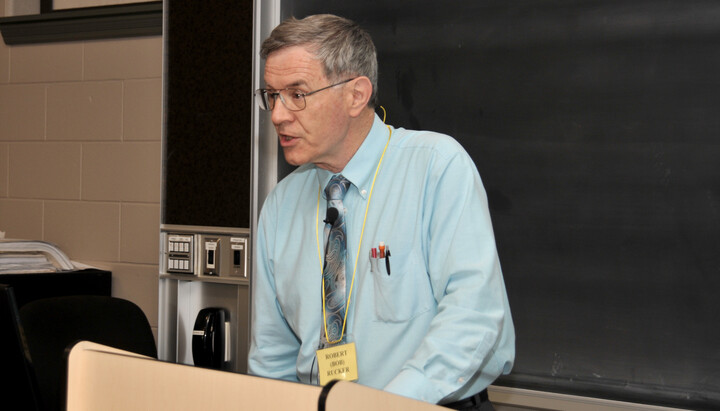
Robert Rucker. Photo: shroud.com
American scientist Robert A. Rucker, a nuclear engineer with more than 38 years of experience in the nuclear industry and a respected researcher in the field of nuclear physics and analysis, has stated that, according to his analysis, the Turin Shroud is approximately 2000 years old.
The scientific confirmation of the Shroud's origin in the first century AD came from nuclear analytical calculations performed by Bob Rucker and his team.
The results of Rucker's research were published in an article titled “Does Carbon Dating Disprove the Shroud's Authenticity?”
These calculations were made using MCNP (Monte Carlo N-Particle) software, which allows for modeling the interaction of particles with materials, including fabrics like the Turin Shroud.
Using this tool, Rucker was able to analyze the Shroud's radiocarbon data, challenging the previous dating conclusions made in 1988.
The 1988 studies claimed that the Shroud dated to the period 1260–1380 AD, leading to theories of its medieval origin.
However, Bob Rucker argues that these findings were incorrect because they did not account for radiation emitted by Christ's body at the moment of resurrection.
According to his hypothesis, neutrons released at this moment could have altered the carbon-14 levels in the Shroud's material, thereby skewing the radiocarbon dating results.
“We have proven that the dating of the Turin Shroud should correspond to the first century AD,” Rucker states, emphasizing the importance of considering the unique conditions under which possible changes in carbon isotopes occurred.
Additionally, Rucker explains that his research goes beyond dating and touches on broader aspects of the Shroud's nature, such as the analysis of the blood and the image itself.
According to him, the image on the Shroud “remains a mystery,” as no one has yet been able to fully explain how the image was formed.
Nonetheless, his group has already presented research results confirming the presence of real human blood on the Shroud, which is also a significant point in favor of its authenticity.
“The Turin Shroud is the second most valuable object for humanity after the Bible itself,” Rucker believes.
The Shroud is currently kept in the Chapel of the Holy Shroud next to the Cathedral of Saint John the Baptist in Turin, Italy, where it continues to be a pilgrimage hub for millions of believers.
As previously reported, a 3D image of Christ was created in Italy based on the Turin Shroud.
Pročitajte takođe
Храм Светог апостола Томе у Лимљанима прославио храмовну славу
Свету литургију на Томиндан служио је игуман брчелски јеромонах Никон Кокотовић
Конференција о теологији митрополита Јована Зизјуласа у Немачкој
Скуп је одржан од 15. до 18. октобра у манастиру Успења Пресвете Богородице у Химелстиру.
Чланице Кола српских сестара из Улциња посетиле Охрид и Солун
Поклоничко путовање обухватило је светиње Охрида, Солуна и манастир Суроти.
Патријарх Порфирије о духовном јединству Срба широм света
Патријарх Порфирије поручио је да географска удаљеност не раздваја верне који су сједињени у Христу и заједничкој молитви Српске Православне Цркве.
Патријарх Порфирије о будућности црквеног живота у Аустралији
Патријарх Порфирије пожелео је да се у местима где живи српски народ у Аустралији подигне што више храмова и да Црква настави да сведочи јеванђељске вредности.
Патријарх Порфирије захвалио епископу Силуану на служењу Цркви и народу
Патријарх Порфирије поручио је да црквену заједницу у Аустралији очекује време мира и развоја, уз захвалност епископу Силуану, свештенству и верном народу.