Head of Archdiocese of W. Europe: Phanar's goal is not missionary work
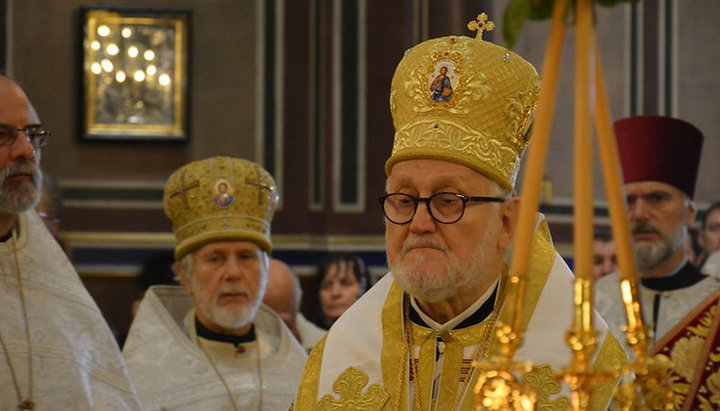
Metropolitan John (Renneteau) of Dubna. Photo: cathedrale-orthodoxe.com
His Eminence Metropolitan John of Dubna, the ruling hierarch of the Archdiocese of Russian Churches of Western Europe, could not accept the Patriarchate of Constantinople’s dissolution of the Exarchate in late 2018 because that would have meant abandoning the Archdiocese’s pan-Orthodox history of missionary work, as he explained in a recent interview with the portal “Pravoslavie.ru”.
“It was extremely difficult for us to accept that the Archdiocese should disappear and its mission should dissolve. Each separate parish would have had to become part of a Metropolis whose spirit does not correspond to our own,” Met. John explained.
According to Met. John, the parishes of the Archdiocese have always been engaged in missionary work throughout Europe.
“This is our Church mission—to gather the Orthodox. We are very open about language: We have parishes with French, parishes with Russian, and parishes that use 3 or 4 languages. We have communities that live on the old calendar, and there are those that live on the new calendar. And when we unite at meetings of the clergy, it gives us a very joyful atmosphere, an atmosphere of mission: We are here to testify that the Orthodox Church is an open Church, a living Church, a Church that is able to receive all those people who want to live in the Spirit, in the Orthodox Tradition, and participate in the Orthodox Liturgy,” explained the ruling hierarch of the Archdiocese of Russian Churches of Western Europe.
The Phanar, on the other hand, considered the West European Exarchate as an institution serving diaspora Greeks, he noted.
“It was extremely difficult for us to accept that the Archdiocese should disappear and its mission should dissolve. Each separate parish would have had to become part of a Metropolis whose spirit does not correspond to our own,” Met. John explained.
This difference in spirit was explicitly stated to him many times over the years, he testified: “I must tell you that when I visited the residence of the Patriarch of Constantinople in Istanbul, I was always told that we are not here to do missionary work: We are here to deal with the Christians of the Greek tradition.”
“This was their leitmotif, and there was no question of a mission,” he added.
“From the very beginning, the Archdiocese had a missionary vocation, and we wanted to follow it. And that’s why we didn't want to destroy our Archdiocese legally. We wanted to preserve its integrity, and it remains so today (in the Moscow Patriarchate – Ed.),” the hierarch affirmed.
He also notes that many in the Archdiocese disapproved of Constantinople’s actions in Ukraine.
Earlier, Metropolitan John drew public attention to the fact that the Western European Archdiocese chose the path of life when it decided to reunite with the Russian Orthodox Church.
Pročitajte takođe
Храм Светог апостола Томе у Лимљанима прославио храмовну славу
Свету литургију на Томиндан служио је игуман брчелски јеромонах Никон Кокотовић
Конференција о теологији митрополита Јована Зизјуласа у Немачкој
Скуп је одржан од 15. до 18. октобра у манастиру Успења Пресвете Богородице у Химелстиру.
Чланице Кола српских сестара из Улциња посетиле Охрид и Солун
Поклоничко путовање обухватило је светиње Охрида, Солуна и манастир Суроти.
Патријарх Порфирије о духовном јединству Срба широм света
Патријарх Порфирије поручио је да географска удаљеност не раздваја верне који су сједињени у Христу и заједничкој молитви Српске Православне Цркве.
Патријарх Порфирије о будућности црквеног живота у Аустралији
Патријарх Порфирије пожелео је да се у местима где живи српски народ у Аустралији подигне што више храмова и да Црква настави да сведочи јеванђељске вредности.
Патријарх Порфирије захвалио епископу Силуану на служењу Цркви и народу
Патријарх Порфирије поручио је да црквену заједницу у Аустралији очекује време мира и развоја, уз захвалност епископу Силуану, свештенству и верном народу.